Tag: church

  • Music And The Temple

    The Old Testament

      1. Introduction
        1. God has used a variety of ways in which to communicate His truth:
          1. Narrative history: Genesis 1-2
          2. Wisdom: Proverbs
          3. Prophecy: Ezekiel/Daniel
          4. Dictation: contained in prophets and history.
        2. But one way that God has chosen to communicate His truth is that of poem, or song.
    • Hebrews 1:1–2

      1     God, after He spoke long ago to the fathers in the prophets in many portions and in many ways,

      2     in these last days has spoken to us in His Son, whom He appointed heir of all things, through whom also He made the world.

      1. God’s means of communicating His Word has been very comprehensive.
      2. The use of songs, however, is unique and expressive, which themselves are part of the revelation.
        1. In the songs of Scripture, we have the heart of God in the organization of the song, as well as the mind of God in the content of the song.
        2. The songs themselves are meant to communicate truth, which are meant to convict reprove, and exhort for the purpose of repentance, comfort, and consolation.
        3. This fact also instructs us that God can, and did, use different styles in order to communicate His truth, since that what style is for.
      3. Notice the sound of the shophar “שֹׁפָר”  on the mt.
        1. Exodus 19:16–19
    • 16     So it came about on the third day, when it was morning, that there were thunder and lightning flashes and a thick cloud upon the mountain and a very loud trumpet sound, so that all the people who were in the camp trembled.
      17     And Moses brought the people out of the camp to meet God, and they stood at the foot of the mountain.
      18     Now Mount Sinai was all in smoke because the Lord descended upon it in fire; and its smoke ascended like the smoke of a furnace, and the whole mountain quaked violently.
      19     When the sound of the trumpet grew louder and louder, Moses spoke and God answered him with thunder.
    1. Exodus 20:18–21
    • 18     All the people perceived the thunder and the lightning flashes and the sound of the trumpet and the mountain smoking; and when the people saw it, they trembled and stood at a distance.
      19     Then they said to Moses, “Speak to us yourself and we will listen; but let not God speak to us, or we will die.”
      20     Moses said to the people, “Do not be afraid; for God has come in order to test you, and in order that the fear of Him may remain with you, so that you may not sin.”
      21     So the people stood at a distance, while Moses approached the thick cloud where God was.
    1.  
      1. This was the ram’s horn sound. It announced the arrival of YHWH on the mountain and it was tremendous. The sound was no doubt that of an intense, siren-like, sound that would deafen the ears. This sound also will accompany the following:
        1. The march around Jericho – Joshua 6
        2. The sacrifice on the day of atonement which accompanies the year of Jubilee – Leviticus 25:9.
        3. The battle of Gideon and the Midianites with 300 horns in order to shock the Midianites – Judges 7
        4. The times when Israel went out into war – 2 Samuel
        5. The announcement of Solomon as king over Israel – 1 Kings 1
        6. The announcement of Jehu as king – 2 Kings 9
      1. Up to this point, the use of the “shofar” is a resemblance leading all the way back to YHWH’s appearance on the mountain. It was a sound not made with people on the mountain, but by God Himself. That sound is replicated by the Ram’s horn. Thus, it would accompany particularly important announcements relating back to the importance of God’s appearance.
      2. Thus, Jericho, Gideon, Jubilee, kingship all replicate the gravity of God’s appearance on the mountain, although the truthfulness of the quality of the kings remains to be seen.
      3. However, as you see things progress, the shophar becomes useful in accompanying other instruments in worship.
      4. David in the entrance of the Ark into Jerusalem – 1 Chronicles 15:25-29.
        1. V. 28 = “horn”
        2. This entourage accompanied celebration of God’s faithfulness and the Word of the Covenant for Israel coming into the city of God’s name.
        3. This arrival was very significant and could be likened to the arrival of YHWH on Mt. Sinai as God “comes” into His city, Zion (Jerusalem).
    • 1. David goes onto to receive plans from God as to the building of the Temple, although he, himself, is not allowed to oversee the project due to his bloody hands (1 Chronicles 22:6-19).
      1. The plans for the construction of the Temple were given to David by God-1 Chronicles 28:1-21
        1. David assembles all the dignitaries of Israel and presents Solomon to them as well as the building of the house. He rehearses the commandment that God gave to him concerning the kingdom of David, the rulership of Solomon, and the throne of the kingdom.
          1. David also gives to Solomon the plans for the design and construction of the Temple Solomon is to build (1 Chronicles 28:11-13).
            1. The plans included the assignment of the singers, who themselves were Levites.
            2. The plans were given from YHWH to David and he wrote them down (v. 28:19).
        2. The plans from God included the division of the sons of Aaron, Levites, who would become the portion of the Levites who would:
          1. Offer praise and thanksgiving:
          2. These are the divisions of the Levites “for all the work of the service of the house of the Lord.”
            1. This phrase describes their work in the house of God-the work of the service.
            2. It is a phrase that refers to the ritual work that the Temple demands.
            3. This included the songs of praise and thanksgiving.
          3. It is evident that these singers, at least the division of singers, also ministered by song in front of the Tabernacle as well until Solomon built the Temple.
      2. Organization of the singers in the temple:
        1. All singers were Levites.
          1. 1 Chronicles 15:16-24
          2. This is significant because these must be spiritually acceptable to serve the Lord, i.e. by His ordination (1 Chronicles 15:2 “Then David said, “No one is to carry the ark of God but the Levites; for the Lord chose them to carry the ark of God and to minister to Him forever.” )
        2. All singers were appointed by lot under the direction of King David.
          1. 1 Chronicles 25:1-7
          2. 1 Chronicles 6:31
    • 31     Now these are those whom David appointed over the service of song in the house of the Lord, after the ark rested there.


    1. This meant that David oversaw their work, organization, and the appointment.
      1. Primarily because he is king. But also because he was a singer himself and the Lord gave him to create instruments for worship (1 Chronicles 23:3-6).
      1. All singers were accompanied by instruments.
        1. 1 Chronicles 15:16
          1. You will notice some Psalms with the names of these kinds/styles of songs in their titles:
    • 1 Chronicles 15:20–21
      20     and Zechariah, Aziel, Shemiramoth, Jehiel, Unni, Eliab, Maaseiah and Benaiah, with harps tuned to alamoth;
      See Psalm 46: title
       
      21     and Mattithiah, Eliphelehu, Mikneiah, Obed-edom, Jeiel and Azaziah, to lead with lyres tuned to the sheminith.

    See Psalm 6 (8-stringed lyre = Sheminith)


    1 Chronicles 15:19

    19     So the singers, Heman, Asaph and Ethan were appointed to sound aloud cymbals of bronze; (see 1 Chronicles 16:5 – Asaph was a chief musician and kept temp with these cymbals).

    1. Heman: Psalm 88
      1. Asaph: Psalms 50, 73, 74, 75, 76, 77, 78, 79, 80, 81, 82, 83,
      2. Ethan: Psalm 89
      3. Jeduthun: Psalms 39, 62, 77 (choir director-
    • yĕdûtûn. Jeduthun. The name of one of the three leaders of the musical guilds in the tabernacle (and the temple) under king David (I Chr 9:16; 25:1–7; II Chr 5:12; 29:14; 35:15). These perpetual guilds were appointed to celebrate, confess, and praise Yahweh with song and musical instruments. The primary instrument of Jeduthun’s guild was the harp, though the trumpet, lyre, and cymbals were perhaps used as well (I Chr 16:42; II Chr 5:12). In the superscriptions to Psalms 39, 62, and 77, the reference to “Jeduthun” is most likely a reference to him and his guild as the musical performers who were to render the psalm instrumentally and/or vocally. It is therefore interesting that the name “Jeduthun” is most likely derived from yādâ, one of the major terms for praise (cf. BDB, pp. 392–393).1
       

    1. What does all of this mean?
      1. Music, song, and instrument, accompanied worship.
        1. Song did not generate worship.
        2. This singing required training –
    • 1 Chronicles 15:22

      22     Chenaniah, chief of the Levites, was in charge of the singing; he gave instruction in singing because he was skillful.

      1. Singing in the Temple served a function, actually three:

      1. Praise of God/Lament to God:
        1. There are different psalm categories:
          1. Lament: has a special meter that imitates limping (Cracking, p. 199).
          1. Plea for help,
            1. Complaint
              1. Confession of sin
      2. Praise: recounting who God is, what He has done, and invoking listeners to join in praise of both (Cracking, p.218).
    • “There are five principle subcategories of this type of praise:
       
      1. Hymns: (e.g., Ps. 24; 29; 33; 100; 103; 105; 111; 113-114; 117; 135-36; 145-50)….
      2. Enthronement psalms: (e.g., Ps. 47; 93;95-99)…
      3. Songs of Zion, including pilgrim psalms (e.g., Ps. 48; 84; 87; 120-34)…
      4. Royal psalms (e.g., Ps. 2; 20-21; 45; 72; 89; 101; 110; 132; 144)…
      5. Creation psalms (e.g. Ps. 8; 19:1-6; 104)…”
    • (D. Brent Sandy, Ronald L. Giese, Jr. Cracking Old Testament Codes, (Nashville: Broadman and Holman, 1995), p. 219).
       
      1. Thanksgiving:
    • Second, this verb was predominatly employed to express one’s public proclamation or declaration (confession) of God’s attributes and his works. This concept is at the heart of the meaning of praise. Praise is a confession or declaration of who God is and what he does. This term is most often translated “to thank” in English versions, but such is not really a proper rendering according to Westermann: In the Old Testament … there is as yet no verb that means only “to thank.” ōdāh, which is usually translated as “to thank,” is not used in the Old Testament a single time for an expression of thanks between men. Thus it is clear from the start that this hōdāh cannot be equated with our “to thank,” which can be directed equally to God and to man. In those places in the O.T. where our “thank” as something taking place between men is most clearly found, the verb used is bērēk, which does not have the primary meaning of “praise” but means “bless.”
      In view of these facts, it is clear that the O.T. does not have our independent concept of thanks. The expression of thanks to God is included in praise, it is a way of praising. (Westermann, Claus. The Praise of God in the Psalms. Richmond: John Knox Press, 1965, pp. 26–27.)
      The best rendering of the term is “confession,” for the person confesses or declares God’s attributes and works, as seen abundantly in the psalter (cf. Ps 89:5 [H 6]; Ps 105; Ps 106; Ps 145) and elsewhere (cf. I Chr 29:13).
       
       
      Ralph H. Alexander, “847 יָדָה” In , in Theological Wordbook of the Old Testament, ed. R. Laird Harris, Gleason L. Archer, Jr. and Bruce K. Waltke, electronic ed. (Chicago: Moody Press, 1999), 364-65.
       
      1. 1 Chronicles 16:4–7
    • 4     He appointed some of the Levites as ministers before the ark of the Lord, even to celebrate and to thank and praise the Lord God of Israel:
      5     Asaph the chief, and second to him Zechariah, then Jeiel, Shemiramoth, Jehiel, Mattithiah, Eliab, Benaiah, Obed-edom and Jeiel, with musical instruments, harps, lyres; also Asaph played loud-sounding cymbals,
      6     and Benaiah and Jahaziel the priests blew trumpets continually before the ark of the covenant of God.
      7     Then on that day David first assigned Asaph and his relatives to give thanks to the Lord.
      1. 1 Chronicles 16:8–13
    • 8     Oh give thanks to the Lord, call upon His name;
      Make known His deeds among the peoples.
      9     Sing to Him, sing praises to Him;
      Speak of all His wonders.
      10     Glory in His holy name;
      Let the heart of those who seek the Lord be glad.
      11     Seek the Lord and His strength;
      Seek His face continually.
      12     Remember His wonderful deeds which He has done,
      His marvels and the judgments from His mouth,
      13     O seed of Israel His servant,
      Sons of Jacob, His chosen ones!
      1. 1 Chronicles 16:31–36
    • 31     Let the heavens be glad, and let the earth rejoice;
      And let them say among the nations, “The Lord reigns.”
      32     Let the sea roar, and all it contains;
      Let the field exult, and all that is in it.
      33     Then the trees of the forest will sing for joy before the Lord;
      For He is coming to judge the earth.
      34     O give thanks to the Lord, for He is good;
      For His lovingkindness is everlasting.
      35     Then say, “Save us, O God of our salvation,
      And gather us and deliver us from the nations,
      To give thanks to Your holy name,
      And glory in Your praise.”
      36     Blessed be the Lord, the God of Israel,
      From everlasting even to everlasting.
      Then all the people said, “Amen,” and praised the Lord.

      1. Prophesying:

      1. Prophesying in music:
        1. 1 Chronicles 25:-7
          1. Illustration: 2 Kings 3:13-15
            1. Elisha is asked to prophesy for the three kings Jehoram, Jehoshaphat, and the king of Edom.
            2. They were to go up against Moab, but ran out of water in the area they were camping.
            3. They called Elisha and asked him to prophesy = do a miracle, since he was a prophet.
            4. In order to prophesy, he asked for a minstrel (“one who plays on a stringed-instrument-Psalm 68:26).
            5. When he played on the stringed instrument, the Spirit of God came upon Elisha.
          2. Thus prophesying was speaking the Word of God and sometimes was accompanied/or promoted by music.
      2. This is key for our consideration of music in the church.
        1. 1 Chronicles 23:24-32
           
      3. Conclusion: What is the result of all of this organization =
    • 2 Chronicles 5:11-14!!!!
       
    1. Ralph H. Alexander, “847 יָדָה” In , in Theological Wordbook of the Old Testament, ed. R. Laird Harris, Gleason L. Archer, Jr. and Bruce K. Waltke, electronic ed. (Chicago: Moody Press, 1999), 366.)
  • Music In Worship-Introduction

    – 1. Introduction

    • The degree to which we ascribe worship to music is the degree that we either know God, or not. That is, if we believe that worship begins with music, we place too much importance on music and not enough upon God. However, if we know God by means of His revelation (i.e. Scripture) and as a result are filled with praise and accompany that with arranging what we have learned in skillfully done songs, then we have the right balance.
       

      1. Music in Worship

      1. Why are we studying this?
        1. Because it is a prominent theme in Scripture.
          1. Because, for many, the music defines worship.
          2. Because, for Berean, we want the music we make and use to be useful in worship.
        2. I want to work through these considerations with you.
          1. Because it is a prominent theme in Scripture.
            1. When was music first introduced in creation/Scripture?
            1. Job 38:7 – the indication is that the angels shouted/sang for the power of the creation ( בְּרָן־יַ֭חַד כּ֣וֹכְבֵי בֹ֑קֶר וַ֝יָּרִ֗יעוּ כָּל־בְּנֵ֥י אֱלֹהִֽים׃)
              1. “Stars of the Morning” = stars that precede the morning of creation.
                1. Genesis “In the beginning, God created the heavens and the earth” = the creation of the earth and the heavens (plural).
                  1. Then, after God created the rough matter of the earth and heavens, He then created light.
                  2. Hence, the angels were created just prior to the creation of the foundations upon which YHWH created the earth.
                  3. Different term, same concept = Isaiah 14:12.
    1. Revelation 12:3–4
    • 3     Then another sign appeared in heaven: and behold, a great red dragon having seven heads and ten horns, and on his heads were seven diadems.
      4     And his tail swept away a third of the stars of heaven and threw them to the earth. And the dragon stood before the woman who was about to give birth, so that when she gave birth he might devour her child.

      1. Luke 10:18
    • 18     And He said to them, “I was watching Satan fall from heaven like lightning.
      1. Revelation 6:13
    • 13     and the stars of the sky fell to the earth, as a fig tree casts its unripe figs when shaken by a great wind.
      1. Revelation 8:10–11
    • 10     The third angel sounded, and a great star fell from heaven, burning like a torch, and it fell on a third of the rivers and on the springs of waters.
      11     The name of the star is called Wormwood; and a third of the waters became wormwood, and many men died from the waters, because they were made bitter.
    1. Therefore, indicates that Satan also was one who sang for joy at the creation of the world. In fact, since there is a hierarchy among the angels, he probably led the angels in their chorus.
      1. The term here, רוע (וַ֝יָּרִ֗יעוּ = Hiphil imperfect 3cp “they were caused to continue singing”), is one that most usually means to “shout.”
        1. It is often translated also as “sing.”
        2. Notice that they shouted “as one” = in unison.
          1. This would indicate order and arrangement.
          2. This unity, togetherness, was appropriate to truly reflect the magnificent display of God and His works.
      2. What were they singing?
      1. Praise of God’s creation knowledge- vv. 1-3
        1. Praise of God’s creation power – vv. 4-6
      1. To whom were they singing?
      1. To God – Job 1:6; 2:1
        1. To one another – remember, in unison.
      2. Genesis 2:23
      1. Genesis 2:23
      • 23     The man said,
        “This is now bone of my bones,
        And flesh of my flesh;
        She shall be called Woman,
        Because she was taken out of Man.”
      1. “This is now
        1. bone of my bones,
        2. And flesh of my flesh;
      2. She
        1. shall be called Woman,
        2. Because she was taken out of Man.”
      3. This is poetry (explanatory parallelism-Chisholm, pp. 142-143).
      4. This is a complex structure of thought that centers around “this one.”
        • Because
          she was taken out of Man.
          This is now bone of my bones,
          And flesh of my flesh;
          She shall be called Woman,
           
          Genesis 2:23
          23    וַיֹּאמֶר֮ הָֽאָדָם֒
           זֹ֣את הַפַּ֗עַם
                   עֶ֚צֶם מֵֽעֲצָמַ֔י
                  וּבָשָׂ֖ר מִבְּשָׂרִ֑י
          לְזֹאת֙ יִקָּרֵ֣א אִשָּׁ֔ה
          כִּ֥י מֵאִ֖ישׁ לֻֽקֳחָה־זֹּֽאת׃
           
      5. There is the repetition of “this one,” “Man/Woman,” and aspects of the bone and flesh creation of the man replicated in the woman.
      6. Genesis 4:14-19
        1. The cursing of the serpent, and the earth, along with the puishment of the man and woman, are spoken in a kind of poetic song, a mourning.
        2. This is a prophetic anthem/declaration against these things by YHWH.
          1. Very often used in the prophets
          2. It demonstrates a judgment.
      7. Genesis 4:18-22
        1. The implementation of putting complex thought of expression to instruments that would express those thoughts, complex thoughts.
          1. V. 21: Literally: “all taking hold of lyre and harp.”
            1. “lyre” = harp, multiple (possibly originally 10, Gesenius p.404) strings and plucked with the hand.
            2. “harp” = flute. Job 21:12; 30:31. Spoken of a “vertically standing” pipe with various air holes making differing notes/tones/pitch etc…
          2. Early in the creation of man, there was complex thought that was then given notes, tones, pitch, and skill learned while instruments developed for that expression.
        2. Psalm 150
      8. You will see more of this: the expression of the excellencies of God must be made.
        1. By complex thought put to words.
        2. By skillful, and accompanying complex notes, put to music & song.
    • 1. For many, music defines worship.

      1. That is to say, too many believe that unless there is music there is no worship.
        1. This is not the teaching of Scripture.
          1. We will examine this more over the next weeks.
        2. Knowledge of God is the goal of all creation.
        1. John 17:3
          1. The purpose of eternal life, the very condition of it, is to know the Father.
            1. This knowledge includes His Person and His works.
          2. It is therefore right to express this extolling of who God is in notes, tones, pitch, and song with instruments.
        2. However, the notes, tones, pitch, and song do not add to that knowledge by means of teaching.
        3. These things accompany teaching, truth about God, and accurate information concerning His kingdom.
        4. However, they don’t define worship.
  • The Replacement of Israel

    The Replacement of Israel

    Yesterday, I watched a video of Kirk Cameron attempting to explain his take on Genesis 12:1-3, especially as it regards the contemporary allegiance to the nation of Israel (see here). Cameron played a clip from a discussion between Ted Cruz and Tucker Carlson in which Senator Cruz quoted (loosely) Genesis 12:1-3, mostly v.3. Kirk Cameron went on to attempt to clarify the passage that Senator Cruz quoted, stating that the meaning Cruz assigned to that passage was not accurate. The net result of Cameron’s thinking is that the modern state of Israel is not the Israel of Genesis 12:1-3 because Genesis 12:1-3 does not refer to Israel, but only to Abraham.

    Although his take is a unique one, the underlying premise is not. As Jesus might say, “You err not knowing the Scriptures, nor the power of God.” The Scriptures explain clearly what is meant in Genesis 12:1-3, the Kingdom of Israel, and the postponement of the Kingdom. Although the confusion shrouds the clarity of the Scripture, the clarity is there nonetheless.

    Genesis 12:1-3

    12:1 And Yahweh said to Abram,

    “Go forth from your land,

    And from your kin

    And from your father’s house,

    To the land which I will show you;

    2 And I will make you a great nation,

    And I will bless you,

    And make your name great;

    And so you shall be a blessing;

    3 And I will bless those who bless you,

    And the one who curses you I will curse.

    And in you all the families of the earth will be blessed.”  (Genesis 12:1–3, LSB)

    Due to the scope of this article, it is not possible to fully develop what this passage means in every detail. However, we can summarize it and refer to other passages that help develop its clear meaning.

    In context, this text is on the heels of Genesis 1-11. That section of Scripture contains the creation, the fall, the flood, the Tower of Babel, and various other details leading up to the days of Abraham. But, it is to Abraham that God speaks in Genesis 12:1-3.

    It is around 2000 B.C. Abraham has been called out of Ur, a bustling town in the Southern regions of modern day Iraq. He is currently en route to a land that he was told would be shown to him by YHWH. But, while in Haran, a few hundred miles north of the promised land, Abraham receives this promise. And, it is a promise, a promise from YHWH to Abraham.

    The summary of the promise contains the following:

    1. I will make you a great nation (v.2)
    2. I will bless you (as a nation) (v.2)
    3. I will bless and curse those who bless and curse you (as a nation) (v.3).

    There are supporting elements to this passage. The supporting elements are as follows:

    1. Abraham will go to a designated land (v.1).
    2. Abraham’s name will be significant (v.2).
    3. In Abraham, the other nations of the earth will be blessed (v.3).

    The overall effect of what YHWH told Abraham is that Abraham, through his own biological progeny will become a great nation. And, through the work of YHWH, that nation will be supreme on the earth, and will bless other nations. Those who resist Abraham, and this promise from God, will be cursed. Those who bless Abraham, and this promise from God, will be blessed.

    It is in the national constitution of the descendants of Abraham that YHWH will live in the land, give Abraham a great name, and will bless other nations.

    Replacement, Fulfillment, Or??

    Kirk Cameron’s take on the passage was that the name “Israel” does not appear in the above passage, the same passage Senator Cruz roughly quoted. It is Abraham’s name that is mentioned. And, since those in the church are called Abraham’s sons (Galatians 3:6-7), whether Jews or Greeks, and since not all biological Israel believes in Christ, then Genesis 12:1-3 cannot refer to Israel, but to believing Jews (individually), and the church.

    The assumption, and outright statement, of Cameron is that the church was always in view, and the nation of Israel, to which he refers as a political entity, is not. In effect, Israel is done for, and will not be the source of blessing, or cursing, for other nations depending upon how they treat Israel.

    The Problem

    The problem with Cameron’s view is that he has already made some assumptions that he uses as tools of interpretation.

    The first assumption is that Israel only refers to those who believe in YHWH. Although it is true that only those biological Jews who believe in YHWH are truly Israel, the other side to that reality is that even those who were unbelieving were called “Israel” in Scripture (Romans 11:2,7 et al).

    The second is that the reference to Abraham is limited to Abraham. It is true that God is speaking to Abraham. But what God said is that He will make Abraham a great nation. Abraham’s descendants are biological Jews, the Hebrews from Judea. It is this national fact to which YHWH refers when He told Abraham that He was going to bless the other nations. In other words, Abraham is the source of the nation in which the world will be blessed.

    Third, equating the church with national Israel in that passage tips his hand as buying into a conclusion before the facts are determined. This is typical from the Reformed camp of Evangelicalism. The desire to be devotionally credible leads to sloppy exegesis.

    Besides, Paul quotes and refers to this passage many times in his writings, and never does he equate this passage with the church. Rather, Paul says that the church is a group of many nations who are blessed through this promise through Abraham and his descendents. This promise to Abraham is the same promise that YHWH made to Christ as well (Galatians 3:16). But, as the context shows, the existence of the nation of Israel, which was formed by a common covenant and Law, does not negate the promise.

    Conclusion

    No. Israel is not the church, and the church is not Israel. It is true that those who are Jews biologically, and who believe in the Messiah, are sons of Abraham through and through since they reflect the faith of Abraham. But, a Gentile reflecting the faith of Abraham is not made a Jew, but is simply reflecting the faith of Abraham and that is as far Scripture allows us to take things.

  • The Span of Time

    “You sound like what I heard growing up!”

    That was a comment after church service Sunday. That sister in Christ, who is in her mid-fifties, her statement was in reference to my sermon in which I introduced what Scripture says concerning “ages.” She was referring to the things her dad taught her, what she heard in churches as a young girl, and the general mood of that day.

    That statement really got me thinking. It occurred to me as well that the things I taught were something like what I used to hear in the early years of my walk with Christ. The distinctions of times, and ages, and Israel, and the church, all seemed to be regular fair.

    But now, the mood has changed. The atmosphere of the teaching in mainstream Christianity seems to have shifted 1) to oppose the distinction of ages in history, or 2) to completely ignore and neglect those things altogether.

    I believe that now, more than at any time, we need to explain that there are distinct ages, or dispensations, of time in the plan of God. These are distinctions that are designed by God based upon clear statements in the Scripture and not manufactured by man’s imagination. Once these things are cleared up, I believe the history of God’s eternal purpose in Christ becomes clearer than ever.

    The Ends of the Ages

    1 Corinthians 10:11 (LSB)

    “11Now these things happened to them as an example, and they were written for our instruction, upon whom the ends of the ages have arrived.”

    This is Paul’s warning to the Corinthian church about their penchant for craving “evil things” (v.6). Israel’s tendency was to pursue a course of misbehavior as it regards idolatry, sexual unrighteousness, and grumbling. The history of Israel is replete with examples of these sins. Paul’s indication is that the Corinthians were in the same boat, as it were, and they also craved evil things.

    But, what is curious is the subtle, and then not-so-subtle, statements regarding the progress of time, and the condition of Israel, being inconclusive without the church. What I mean is, it seems that Paul is indicating that over the eons what happened to Israel was not simply factual history. It was all, indeed, events that were meant to benefit the church, a dispensation of time wherein men and women, slave and freemen, Jew and Gentile, would benefit from the New Covenant seemingly designed only for Israel (Jeremiah 31:31-33).

    They Could Not Be Perfected Without Us

    “because God had provided something better for us, so that apart from us they would not be made perfect.” (Hebrews 11:40, LSB)

    This statement from Hebrews is very similar in emphasis in 1 Corinthians 10. The indication of the writer of Hebrews is that the fathers, Israel, the prophets, and the godly men and women of Hebrews 11 were not the end-all of God’s plan. The writer is identifying the reality that, in God’s wise intention, there would exist a future people, future to the people listed in Hebrews 11, who also would “be perfected.” The complete sanctification, which is idea of “perfection,” of a people including, but not limited to, Israel and the progenitors of Israel, was God’s intention (Hebrews 2:10).

    This is wonderful news! It is incredible to think that in the plan and purpose of God, He would conceive of the concentration of His covenants and Temple, and His Law, upon one nation, with the intention all along to bring that nation to the point that they would abandon those things, and her God, for evil things such that God would then turn His (predetermined) eye beyond Israel and to the nations (Gentiles). The genius, the brilliance, and wonder, of it all demonstrates a level of purpose and plan and power far beyond the imagination. The purpose and plan of Yahweh to preconceive of this extensive ambition is magnificent. But, now consider, that the power that is required to move in the hearts and events of Israel in order to accomplish His purpose and plan is nothing short of absolutely divine and must cause us to bow in worship.

    Having His purpose to determine that He would bring a people into an assembly completely apart from national identity, biology, and even apart from an external script of worship (i.e. a Temple and sacrifices), shows a quality of perfection that, apparently, could never have been possible in the worship economy of Israel.

    Why? Why was it impossible to perfect a people before us? Because, we are the church. The church is a body gathered together from tribes, languages, nations, from around the globe and based solely on a single thread of commonality-we believe the Messiah has come in the flesh (1 John 4:2). This faith in Jesus of Nazareth is the only common thread of our existence that we have. Without it, there is no church. Without it, there is no salvation. And, without it, there is no “ends of the ages.”

    Jesus Had To Come; Jesus Had To Die

    When Paul wrote, “…upon whom the ends of the ages have arrived,” he was referencing the above fact, that the ages of time in human history have come to their climax. In other words, the whole point of God’s plan is now complete. The Messiah is the Son of God, and He arrived in the flesh of men (John 1:14), and He accomplished all the Father had given Him to accomplish while in the flesh (John 17:4). Now, the Father is able to fulfill His unfathomable plan in Christ. Nothing else is needed in order to do that.

    Why did Jesus have to come in the flesh, though? Was there a specific reason in order to motivate such a plan? Was there some kind of purpose beyond time, and “eternal purpose”? Absolutely, there was! The coming of Messiah, the Son of God, was the hinge pin of His plan, the event that would accomplish the predetermined purpose of the Father. Once again, the writer of Hebrews teaches us what that purpose was.

    5 Therefore, when He comes into the world, He says,”

    “Sacrifice and offering You have not desired,

    But a body You have prepared for Me;

    6 In burnt offerings and sacrifices for sin You have taken no pleasure.

    7 “Then I Said, ‘Behold, I have come,

    In the scroll of the book it is written of Me,

    To do Your will, O God.’”  (Hebrews 10:5–7, LSB)

    The entire sacrificial and offering ritual system, the dominant component of their Law (v.8), was given to Israel in order to cover their sins. However, it was clear that the system was not able to perfect the worshippers because 1) they kept sinning, 2) the atonement was temporary. And, remember, it is perfection that God is after for both Israel and those to come beyond Israel. The rituals of the Law, which were dependent upon the behavior of already-fallen man, simply did not accomplish perfection. It couldn’t. And yet, it was a system of worship that God Himself gave to Israel to perform, under penalty of death (Hebrews 2:2).

    However, there needed to be something beyond the earthy and the temporary to accomplish the needed completion of the eternal atonement. After all, God did promise to the Son an inheritance. The Spirit told David about that conversation in eternity in Psalm 2:8

    “‘Ask of Me, and I will surely give the nations as Your inheritance,

    And the ends of the earth as Your possession.”  (Psalm 2:8, LSB)

    The record states that the Son was commanded to ask the Father for an inheritance to possess forever. The inheritance consisted of nations (“people”), and the entire earth. These things were the components of creation, destroyed by the fall of Adam. The people of the earth were subject to death (Hebrews 2:14-15; cf. Romans 5:12ff), and the earth was subject to a curse of “futility” (Romans 8:20). Both components of the Son’s inheritance were effectively destroyed.

    How could they be recovered? What needed to happen in order to restore the plan for the Son? In a word, an atonement was needed. The recovery is called “redemption,” but the need was an atonement. Something had to cancel the death judgment in order to bring back the life that was lost. And THAT is why Christ died. His death satisfied the Father’s will. His obedience was not the obedience of the Mosaic Law, but the obedience of death of crucifixion.

    It was His death on a Roman cross, condemned by the Jews apart from the Romans, that introduced the death of the Messiah into history. That action pleased the Father because through death Jesus Christ was able to absorb the death God pronounced upon Adam, and his progeny, such that death would be destroyed and life would then constitute the nature of the elect.

    In so doing, Jesus Christ is now able to receive the kingdom promised to Him, and to us, from the foundation of the world (Matthew 25:34). In order for the Son to have many brethren, they would need to rule with Him since they would need to be like Him. This redemption gives to us the new nature, a new heart necessary to enter into that kingdom forever. Those whose heart has not been re-created by the Holy Spirit, based upon the death of Jesus Christ, will not, cannot, inherit the Kingdom of God. As Paul wrote, “flesh and blood cannot inherit the kingdom of God”(1 Corinthians 15:50). The corruption of the body is permanent. It cannot be improved upon. I can only be created all over again. Only God can do that, and He does in Jesus Christ (Ephesians 2:4-5).

    Jesus Had To Be Raised

    The death of Christ, really the entire suffering of Christ from the Garden of Gethsemane to the wooden stake between two thieves, completed the atonement that the Father witnessed and thereby “justified the many” (Isaiah 53:10-11).

    The evidence that the atonement was satisfactory, propitiatory, is the resurrection of Jesus Christ from the dead. That resurrection establishes, once and for all time, the absolute completion of the Father’s plan to redeem the kingdom of the Son. His resurrection from the dead ended the “work” of Christ such that Jesus could say that He has accomplished the work the Father gave Him to do (John 17:4). It was by this work, the manifesting of the name of the Father upon the earth, and having drawn the men and women who were given to Him by the Father to Himself.

    Once all of that which could be done in the flesh and only accomplished during the earthly ministry of the incarnate Son of God was essentially accomplished, then the Son could be raised from the dead and given life again, bodily, and return to heaven seated next to the Father. Death could not keep the eternal purpose of the Father from happening.

    The resurrection of Jesus Christ is what the Old Testament calls being “begotten.” The term refers to being brought into life, usually by childbirth. However, in the case of the Messiah, it is a reference to His being brought into life by bodily resurrection from the dead. Again, Psalm 2 gives us the meaning:

    “I will surely tell of the decree of Yahweh:

    He said to Me, ‘You are My Son,

    Today I have begotten You.  (Psalm 2:7, LSB)

    “Today I have begotten You” is a component of the Father’s plan to raise Jesus Christ from the dead in bodily form on a particular day (see Acts 13:33; Hebrews 1:5; 5:5). The third day, the very morning of that day, Jesus Christ was restored to His body, a newly created body that was not free of scars, but was free of death.

    Thereby, being raised from the dead, He was then able to be received back into heaven once again. The magnanimous and rich and unfathomable work of the Father was completed! The Son is declared to be such with power (Romans 1:2-4), and will return again in power in order to receive His inheritance, and inheritance of love (John 3:35).

    Conclusion

    Now, post-resurrection, we are in the ends of the ages. The dispensations of time leading up to the cross of Christ, then emanating from that cross to our day, and on into the coming again of the Sun to physically take over His kingdom, a kingdom filled with lawlessness and lawless ones. The church of Jesus Christ awaits her Rapture. She anticipates that rescue out of the world in order to be saved from the wrath to come (Romans 5:9). But, for now, we live in the special time of post-Messiah, post-resurrection, which identifies this age as the end.

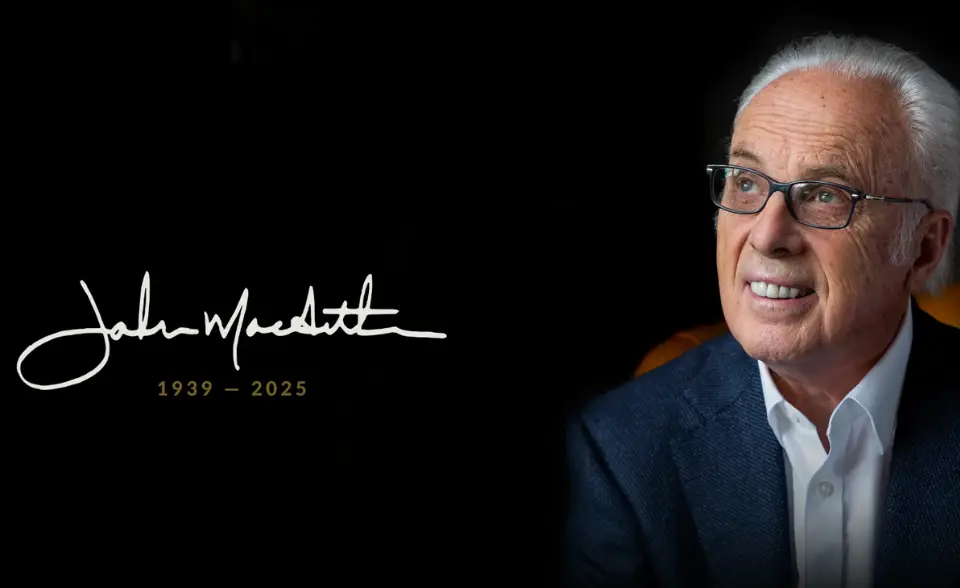
  • My Tribute to John MacArthur

    My Tribute to John MacArthur

    One of the most enduring portions of the legacy that I can think of from John MacArthur’s life, as it relates to me and thousands of other graduates of The Master’s Seminary, is the very school that equipped us to shepherd the flock of God (1 Peter 5:1-5). The effect of his leadership in the church cannot be known on earth. Only God can see the thousands of ways John shepherded the flock. The result of that has been the most beautiful, godly, devoted, and sincere Christians on the planet. But, it was the formation of an institution which attracted the best professors in the world in order to teach men how to rightly divide the Word of God that most affects me personally. 

    Context

    My introduction to the teaching of John MacArthur was through tapes I listened to and books I read when I became a new Christian in 1992. I read Our Sufficiency In Christ, which removed me from involvement in the psycho-therapy world. I listened to tapes from the gospel of Matthew, which helped me to understand the Lord’s earthly ministry and made me hungry for more. I attended my first Shepherd’s Conference in 1996, which is where I first saw the man. He was unassuming and I was struck at how little fanfare there was around such a “celebrity,” so I thought to myself. I read, and reread, the series from The Master’s Seminary faculty on Pastoral Ministry, Expository Preaching, and Biblical Counseling. 

    All of this to say that when I was first saved, I was insatiably hungry for the Word of God. I didn’t eat or sleep hardly those first few days after believing in Christ. I didn’t want anything else. I did not care about anything else. Although a university student, I began to use that position as a platform to explain the gospel any time I could. When I listened to a tape, or read one of his books, or article, or anything else, I was attracted to what he had to say like a moth to the flame. I was desperate to learn the Word of God, to understand it in the same way. 

    The Master’s Seminary

    My family and I moved to California from Montana in 2003 in order that I would attend The Master’s Seminary. I had seen Dr. Robert L. Thomas answer my questions both personally via email, and publicly during a Q&A at the conference to which I referred earlier. The understanding that he had of the Scriptures was what I coveted. I wanted to know the Scripture like that. My desire to understand the text wasn’t so much because of John MacArthur directly. Rather, it was because of Dr. Thomas. All I knew was I wanted to handle the text the way he does. The precision, clarity, and confidence that he had was life-giving to me. 

    But, what bolstered and supplemented my studies was Sunday worship. I served in Children’s Ministries and participated in a fellowship group, as well as became familiar with so many other ministries. My family and I made friends with so many people. We also learned how church politics work. So much in the body at Grace Community Church directed what I was learning. But it was the text of Scripture itself that gave me life. I could not study enough. I could not listen to sermons enough. I could not hardly stand having to wait for the next class in order to keep learning. 

    It was Dr. Robert Thomas’ teaching, expectations, precision, and personal friendship that compelled me to further study. But, it was Pastor John’s regular presence in the pulpit publicly giving examples of how to handle the text of Scripture for preaching and communicate it in ways that the church could understand. His ministry flavored the church like nothing else. Some might say that that is bad. I say that it is part of the example of leadership. It cannot be helped. The man of God (1 Timothy 6:11) must be part of the hearts of God’s people because of love’s sake (1 Thessalonians 5:12-13). And, I believe that is what John MacArthur (and his family) did. 

    Pivotal Meeting

    It was my second-to-last year of The Master’s Seminary (2008). I was completely unsure where I would go from there. Being Italian, I had considered Italy as a missionary. I considered returning back to Montana to minister there somehow. Or, maybe I would go somewhere else.

    One evening after Sunday service, I went down to talk with John who was staying after service in order to answer questions people might have. I walked up to him and asked him what I should do. He knew me from my service in the church, but I would not say that he knew me very well. I personally did not feel that I had anything of value to offer him. I just wanted to hear what he thought since I was coming to my whit’s end. I was ready to do whatever he said. 

    John said to me, “I’ll tell you what you need to do. Contact my secretary, Pat, and tell her to set up a time for you to come see me. Can you do that?” I was stunned. “Um, yes. I can do that.” I left there in a complete daze. I went back to my wife as she was gathering the kids and told her what happened. She and I both were dizzied with the anticipation of my meeting with him. 

    It took a few weeks, but we finally made it happen. As Dr. Mayhue and Clayton Erb were exiting John’s office, I was graciously invited to enter (at the quizzical looks from Dr. Mayhue and Clayton). I came in, looking around at the books, furniture, and pictures on the wall. John went around and sat at his large broad wooden desk. He asked some personal questions about me, my family, where I’m from etc.. I was fumbling with my answers, not even knowing what to ask or how to carry on a conversation. I am sure he knew how I was feeling, being overwhelmed with being in his office alone with him. 

    He was sitting there, leaning back in his chair with his legs crossed in polite fashion, nonchalantly, while we talked a bit. I told him my ideas of Italy, or Montana. Then, he sat up, and told me in kind of an urgent manner, “Forget Italy. Forget Montana. Find a church somewhere, get in it and preach the Word! Preach to the max!” I don’t remember anything else after that (except that I could use his name on my résumé). I was stunned. In fact, it would be best to say I was dazed to the point of shock. I don’t know what he saw, but something made him urge me to stop playing around and get to the most important thing-preaching the Word! 

    I Will Never Forget

    I will never forget that meeting, that charge. It has been the preaching of the Word that has gotten me voted out of churches, slandered, hated, threatened, and blacklisted. It is the preaching of the Word that has made me an outsider, in many ways to the very institution from which I learned to preach the Word. It has been the preaching of the Word that has caused financial ruin, physical damage from years of bivocational ministry, and alienation from some of my children. It has been the preaching of the Word that has brought so much heartache and pain. 

    But, it is the preaching of the Word that controls me. I have seen people repent and follow Christ. I have ministered to homeless and wealthy. I have seen the work of the Word in overseas nations, and churches. I am seeing it in the depths of my family, and in my own soul and mind as I study and learn.

    I am a man under orders. John gave me the charge, and I will fulfill it. Dr. Thomas gave me the tools, and I will use them. The Lord put both of these men in my life for just such a time as this in order that I might carry out the preaching of the Word of God (Colossians 1:25). The church needs John MacArthurs and Robert Thomases. If no one else will, by God’s grace, I will. 

  • The Lord’s Care For His Church

    The Lord’s Care For His Church

    Luke 9:1–3 (LSB)

    1And calling the twelve together, He gave them power and authority over all the demons and to heal diseases. 

    2And He sent them out to preach the kingdom of God and to heal the sick. 

    3And He said to them, “Take nothing for your journey, neither a staff, nor a bag, nor bread, nor money; nor have two tunics apiece.

    The Lord entered into His ministry with an immersion into the Jordan River. After that, He was tempted and tested for 40 days. After that He was reunited with disciples He made while at the Jordan and then began to make more disciples. All the while, day-in and day-out, they needed to eat, sleep, and drink. The Lord cared for these men while He was with them for the over 3 years they ministered together. Whether it was taking tax money from the fish’s mouth, or multiplying food from a few loaves and fish, or being cared for by a prearranged meal of some sort for Passover, the Lord Jesus Christ cared for His dear flock, the flock which would inherit the kingdom one day (Luke 12:32).

    However, at the end of His ministry, just hours before His execution, He made a very interesting, and often overlooked, statement. Only Luke records it. A year earlier, He told them to go out and preach the gospel of the kingdom and take no provisions for that itinerant journey. This would mean that whatever their needs might be, they would be provided. Apparently, it was oftentimes from good people who housed these men. But, at the end of His ministry, the instructions changed.

    Luke 22:35–38 (LSB)

    35And He said to them, “When I sent you out without money belt and bag and sandals, did you lack anything?” They said, “Not a thing.” 

    36And He said to them, “But now, whoever has a money belt is to take it along, likewise also a bag, and whoever has no sword should sell his garment and buy one. 

    37“For I tell you that this which is written must be completed in Me, ‘And He was numbered with transgressors’; for that which refers to Me has its completion.” 

    38And they said, “Lord, look, here are two swords.” And He said to them, “It is enough.”

    The instructions changed from, “Take nothing for your journey, not tunic, money, sandals…” to “But now, take a money belt, bag, and sword.” What changed? Well-meaning Christians and churches might quote the passage from the middle of His ministry, but ignore the teaching from the end of His ministry.

    When the Lord sent the men out earlier, He promised to care for them. At the end, His promise does not seem to be as miraculous, but it was different nonetheless.

    But Now….

    The key to understanding this passage in relation to the Lord’s provision is this simple phrase, “But now…” The New Testament Greek (UBS5): “Ἀλλὰ νῦν.” The first word is a conjunction (actually, “disjunction”) which emphasizes a contrast from one previous thing to another. The English contrast conjunction “but” is an okay translation, but it does not carry the weight that this conjunction does. It would be better translated, “Rather,” or “yet.” The idea is that it contrasts a previous condition, in this case, the condition of the question and answer discussion in v. 35, with the condition of v.36. Coupled with it is the adverb “now,” a timing indicator as well. It also contrasts the previous discussion in v.35. The timing of v. 35 was during the preaching excursion in the middle of His ministry. But, in contrast to that time, the current time, which is the time of the Lord’s crucifixion and return to the Father, ultimately, this time is different. No longer are you to expect v.35, the Lord’s presence and their lack of preparation. Instead, they are to prepare.

    Jesus is telling these men that the ministry that they are transitioning towards will be different in this regard. They must prepare properly because, even the though the message isn’t changing, and the need is not changing, one thing is changing-He’s leaving them for a while (2,000 years to date).

    The Lord’s provision may still be just as “miraculous,” but now His provision is related to their preparations. Let’s look at each part of His instructions.

    Take A Money Belt

    But now, whoever has a money belt is to take it along, 

    Matthew’s record says:

    Matthew 10:9 (LSB)
    9“Do not acquire gold, or silver, or copper for your money belts,

    The command from the Lord was to not take money for their ministry, only food and shelter. The verb there indicates that this gold, silver, or copper was in response to the their preaching. Jesus forbade that here, for a time. The money belt was like a little purse in which a man would carry his money. This money was for provisions, or taxes, or simply to carry his money safely from town to town.

    But, the Lord’s command here is to not use ministry as a means of making money. They were to concentrate on simply preaching and exercising the powers Jesus would give them to heal the sick, and raise the dead. It would not have been right for people to associate these miracles, and this message preached, with money.

    This change means that their ministry of preaching would change. Although there is no overt reference to it, the change likely also has to do with the cessation of the apostolic gifts associated with their ministry. The Messianic gifts which would accompany the presence of the Messiah, and His kingdom, must not have the appearance of dependence upon the people who are hearing the kingdom message for the first time. Rather, they must hear the message, and see the miracles, completely unattached to the normal fees associated with itinerant teachers and wandering philosophers of the day.

    However, since the formation of the church is about to take place (Acts 2), there is a group out of which a preacher (whether apostle, or elder, or pastor) could expect to receive something to put in his money bag. This is different from expecting money from the unsaved. Rather, this is the expectation that the laborer in the Word is to be supported by the church He is forming.

    …Likewise also a bag…

     likewise also a bag,

    This bag would be a kind of leather pouch in which to carry belongings. Sometimes it refers to a place to store food for travels, or game procured from hunting, or even weapons. The bag was forbidden in the previous charge, but is now directed to be taken along in ministry. The word “likewise” means that the bag, in the same way as the money belt, is to be brought along in the apostolic ministry.

    It would be in this bag that the preacher would, likely, carry his provisions. His bread, his outer tunic, his other wares for travel and stay in places of ministry. This would take planning, discussions, and payment to buy those things for the trip. Again, the idea is that the Lord wants these men to organize their belongings for their ministries. No longer (“But now”) are they to go out with nothing, as in the previous trips. Rather, with Jesus leaving and the formation of the church body beginning, it would be expected, even directed, by the Lord to the apostles and the church simultaneously, that provisions for ministry are made.

    …buy a sword…

    and whoever has no sword should sell his garment and buy one. 

    Of all the instructions, this one receives the least attention. As a result, we cannot read an adequate explanation in the commentaries, sadly. But, the continuation of the Lord’s teaching reaches to this instruction. Let’s look at it.

    A sword had various uses in the ancient world. It was used by government soldiers for war. It was used for weapons by thieves, and attackers. But, it was also used by regular travelers for self-protection. For example, Peter noted that two swords were already available with the men (Luke 22:38). That means that at least two of the men already carried a sword and was prepared to use it. Matthew 26:52 indicates that Peter possessed a sword. The other one must have been Simon, the Zealot, since the sword was necessary for his stock and trade.

    The sword, unlike the other provisions, is not forbidden in the previous ministry endeavor. Neither Matthew, Mark, or Luke mention the men being held back from owning, or carrying, a sword. Again, none of these men were soldiers, and certainly not thieves. But, they would, from this moment on, need to protect themselves.

    The self-protection in their ministry travels was of such import as to require the sale of the man’s tunic, if he does not own a sword. I believe this would be because of the increase of lawlessness that would characterize the days of the church. Either way, Jesus, with the same authority as the other instructions, commands that a sword be procured because of the days ahead.

    Conclusion

    The preacher’s food, shelter, protection, and clothing, comes from preparation. His provisions certainly come from the ministry itself, but not from unbelievers (see 3 John 5-8). Rather, their provisions must be from the church itself. Assuming the fact that a “laborer is (still) worthy of his wages” (see Luke 10:7; 1 Timothy 5:18), he still must expect his livelihood to be exclusively from the ministry. There can be no “part-time” preachers, in other words.

    This preparation assumes fundamental, objective, inscripturated, commands from the Lord around which to build a ministry. These include that a church is to save up on the Lord’s Day for the saints (1 Corinthians 16:1-3). The man of God is not to be a lover of money (1 Timothy 3:3). The church must make decisions based upon the discipleship purpose for which they are sent into the world (Matthew 29:18-20). And, there are many other factors that a church must objectively carry out in order to obey this short list of instructions in Luke 22.

    However, for our part, it is enough to realize that the provisions of the man of God are not to be sourced from the man himself. Rather, the commitment to the ministry, love of the man, and the love for Christ, must compel the church to value the work enough to keep gifted men fed and clothed in order to carry out the Lord’s Word to the ends of the world.